Furniture Restoration
Restoring Antique Furniture
Many of the antique furniture projects that pass through my workshop involve the restoration of tables, chairs, chests, cupboards and other everyday furniture. Private clients usually request that their antique furniture or other antique wooden objects be made to look better and function well in their homes. A door must open and close properly, a chair must be stable to sit on, and a drawer must easily slide in and out of its housing. Restoration involves much more than a cosmetic touch-up or a simple repair.
How is antique furniture restored?
I try to balance the client’s wishes with the requirement for functionality and beauty while observing stringent professional antique furniture restoration guidelines. I always attempt to restore an antique made of wood in a way that is not disrespectful of the craftsman who created the piece. I do this by trying to use the same restoration techniques and materials that were originally used for constructing and finishing the furniture being restored. A dovetailed drawer with its internal parts broken should be fixed with a new dovetail joint. Antique furniture such as an oak chair which has a missing leg requires a new leg made out of antique oak wood attached with a mortise and tenon joint. The conservator’s choice for such repairs is hide glue because of its reversible properties – a key restoration principle when restoring antique furniture and other fine wooden pieces.
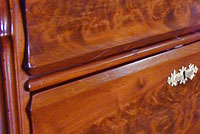
A chest of drawers French polished by hand should be polished by the same method employed by restorers throughout the life of the chest. Modern agents such as lacquers should not be applied to such a piece. When considering antique furniture restoration I advise clients not only about how to restore and beautify their antique furniture or to improve an item's functionality, but also about the optimal intervention methods that will prolong the life of the piece and maintain its historical and actual value. Sometimes there is no single "correct" approach to restoring a given object. Antique furniture restoration is after all an art. Successful restorations depend as much on following the above principles as on the talent and experience of the restorer.